Wednesday, November 12, 2014
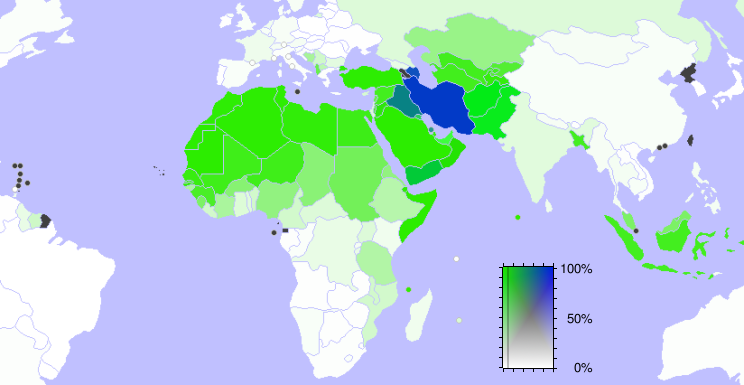
Middle Eastern Terrorism
Middle Eastern terrorism terms
Jihad
Jihadist
Fundamentalist
Muslim
Arab
Al-Qaeda
Sunni
Shiite
Islam
Islamism or Islamic Fundamentalism
Koran or Quaran-
Caliph
Caliphate
Mecca
Is the following below terrorism? As taken from: http://www.crf-usa.org/bill-of-rights-in-action/bria-20-1-c-the-rise-of-islamist-terrorist-groups
A radical
environmental group burns a vacant hotel that was recently legally built in a
wilderness area.
A national separatist
group in Country X blows up a railroad station in Country Z to discourage that
government from supporting policies of the government in Country X.
Try to find an example involving the U.S. where a similar
event took place for the last 3 examples above.
Example for # 1:
Example for #2:
Example for #3:
Questions from Reading
found at
http://www.crf-usa.org/bill-of-rights-in-action/bria-20-1-c-the-rise-of-islamist-terrorist-groups
1. Osama Bin Laden had called Americans “the
worst _______ in the world today and the worst __________...”
2. Al-Qaeda is different from other terrorist
groups in that they:
3. What is Islamic fundamentalism?
4. Fundamentalists call for a return to “pure”
Islam as a practice by the Prophet _________________.
5. They believe they have been invaded by
_________________ _____________ and ________________________.
6. They feel women should:
Examples: list 3
1.
2.
3.
7. The Islamic terrorists see themselves as:
8. Terrorist tactics run against the basic
teachings of Islam. Why?
9. What was the six day war?
What role did the United States
play?
10. What and who was the PLO?
11. Name two terrorist events the PLO was
involved in.
12. Is the PLO still active in trying to destroy
Israel?
13. Who is Muhammad bin Abd al-Wahhab?
14. Wahhabism is promoted in the Saudi Arabia
educational system. Tell me about their
textbooks and curriculum.
15. Explain how the United States was involved in
the Iranian Revolution.
16. Explain how the United States was involved in
the Soviet War in Afghanistan.
17. How did this lead to Bin Laden’s uprising.
18. Who is the Taliban?
19. Osama Bin Laden declared that since the Gulf
War against Iraq in 1991 the United States had:
20. What is a fatwa?
21. What was bin Laden’s decree?
22. Islamic fundamentalism attracts what type of
people?
Islamic
Fundamentalism: What Should We Do About It?
There is a connection
between certain kinds of Islamic fundamentalism and Islamist terrorism. What
should we do about this?
- Below are listed some policies that the United States
might adopt to try to counter Islamist terrorism. Form small groups to
discuss these policies.
- Each group should choose what it considers to be the
most important policy for the United States to adopt now. Groups may
develop their own policy choice if they wish.
- Each group should then defend its policy choice before
the rest of the class.
Proposed Policies
- Remove all American military forces from Saudi Arabia
and/or Iraq.
- Remain in Iraq to develop democracy as a model for
other Muslim countries.
- Pressure Muslim countries to close religious schools
that preach hatred.
- Provide foreign aid to Muslim countries in order to
reduce unemployment and poverty.
- Give foreign aid to countries that curb Islamists.
- Work to achieve security and justice for Israel and
Palestine.
- Capture, try, and (if convicted) execute Osama bin
Laden. So we killed him. Analyze if this policy worked.
- Lessen our dependence on Mideast oil.
- Develop your own policy.
Wednesday, November 5, 2014
MUNICH
First, the terrorism issue. Spielberg told a Los Angeles Times interviewer that answering aggression with aggression "creates a vicious cycle of violence with no real end in sight." He said much the same thing to Time magazine -- "a response to a response doesn't really solve anything. It just creates a perpetual-motion machine."
And his film frames for the viewer exactly this bleak vision of unending and unendable violence. Palestinian terrorists murder Israeli athletes to put their cause before the world. Israeli counterterrorists assassinate Palestinian terrorists involved with those murders. Palestinian terrorists carry out more murders of innocents, presumably because of the assassinations. At the end of the film, the camera lingers on the pre-9/11 Manhattan skyline, dominated by the twin towers of the World Trade Center. The film is crafted to demonstrate that violence breeds violence in the long run as well as in the short run.
Friday, October 17, 2014
Ebola Strategy
EBOLA Final Assessment
So in groups we worked to come up with a strategy to stop the continuation of the Ebola disease. You were to complete an epidemiologic triangle finding the host, agent, and environment. Your group was to then come up with strategic plan to stop the disease. I would like to assess what you learned. To do this I want you to tell me what you learned about the disease that you did not previously know. Take me through the process you went through both individually and as a group.
Basically it is a review of what you personally learned from your own research and group members research and your thoughts on your group's strategy. (Let's say 200 words)
Part 2
In addition, we might as well add our final goal of connecting globalization and global health. Diseases and health problems know no borders? What is a problem in one person or country can easily be a problem somewhere else in the world due to the rise of globalization. How will the future of our environment, of our expanding population, of our current technology impact the future of our health? How are they connected? What does the future hold? Brainstorm and analyze! (Let's say 200 words also)
Friday, October 10, 2014
TERROR ALERT!
"The world is a dangerous place to live, not because of the people who are evil, but because of the people who don't do anything about it." Albert Einstein
The above quote is one of my favorite quotes I refer too when I think about homeland security both domestic and abroad (international). I find it sort of symbolic or maybe even ironic that a guy who helped the United States build the atomic bomb (Manhattan Project) and is one of the greatest thinkers of all time would put a spin on the "axis of evil" and place the responsibility of stopping danger on the "allies of good." So to what extent should we blame ourselves for the evil in the world? In class we will want to focus on this question as well as examine the United States current Security Strategy. We will want to explore other countries fight against terror and define some of the current terrorist threats we need to protect against (refer to ISIS or ISIL blog). Lastly, we will analyze how terrorism is related/linked to globalization and the effect each has on each other.
George Mason video
Thomas Friedman
You tube-a different spin on things
Kurbaan
Terrorism Definition
Terrorism Watch and Warning
Paranoia
Nuclear Weapons stockpile
2013 National Security Strategy
ISIL-blog we did in class
Boko Haram
Al-Qaeda
Khorasan-maybe a more dangerous group than ISIS-article
Health Insurance and Politics
So when we were watching the documentary Sicko (directed by Michael Moore) I had a thought (oh great). I wanted to know how much money the healthcare industry contributes to Congress annually. I also thought it would be interesting to compare the differences in off-year elections to the Presidential election years. With a little research I came across a great website that had the information I wanted to know.
The Opensecrets.org website has charts and graphs that help explain how much money is contributed to political parties yearly. Since we are studying healthcare the following link will take you to the health care portion of the website. It is very interesting to see just how much money the health care industries contribute to politicians and parties.
In the right hand column there is a dropdown box that will let you explore other sectors such as energy, defense, and so forth. There is a wealth of information on this website that will help you better understand not only politics but the influence that both public and private industry has on elections, political parties, and recipients. One cannot underestimate the influence of lobbyists in today's government either.
Pay close attention in particular to the charts on contribution trends and party split found here. Very interesting to look at election years and contributions and how they seem to go up. Also look at who receives more of the contributions-Republicans and Democrats. Can you figure out why?
Thursday, October 2, 2014
Health Alert!
Global Health
So with the recent Ebola outbreak the last few months in Africa and now with a confirmed case in Texas and the EnterovirusD68 spread in the U.S., I thought now would be a good time to talk about our healthcare system in the United States. In particular I think we should compare it to Canada's healthcare system and take a look at some of the healthcare systems in other countries. Along with that we should tie in infectious diseases (Ebola and the EnterovirusD68 to be specific) to globalization. I think that we should also examine what the future holds for the U.S. healthcare system. One question I have is with the Affordable Care Act now in place, will people be able to afford the bills and premiums that these new potential, epidemic diseases, will surely cost Americans. It will cost millions for hospitals to initiate isolation measures and other specific care that will be needed. And with the high-tech testing that will be required, who will foot the medical bills. We know the medical industry will get their money one way or another.
And just to show an example of the costs of healthcare for the journalist that is now quarantined in a Nebraska facility with Ebola, read this article.
And I thought of another idea yesterday. I have linked an article that helps explain this-if you can follow it. But what about an international healthcare system? What if you had a set of international guidlelines/medical facilities/etc. that promoted competition between health care providers, companies, hospitals, and doctors. This would be true globalization of health care. Just a thought.
So to start with we will answer the questions at the following link (Global Health). We will watch a documentary called Sicko directed by Michael Moore and then we will explore the Ebola disease along with other diseases and tie them into globalization.
1. Step one is to go to my Global Health link above and visit the websites and answer the corresponding questions.
2. Step two is to watch the documentary Sicko and we will answer some questions and blog on it.
3. We will read an article on the concept of a international healthcare system. We will do group work and comments on my blog. linked an article
4. Step 4 is we will investigate the Ebola virus, tying in globalization and the future of the American health care system. Your group will devise a strategy using the Epidemiologic Triangle as a basis for your strategy.
5. We will blog individually on how Globalization and global health are linked together.
Ebola-how it started
current map update
Contagion
Subscribe to:
Posts (Atom)